What is Bujinkan?
 武神館 — THE HOUSE OF THE WARRIOR GOD


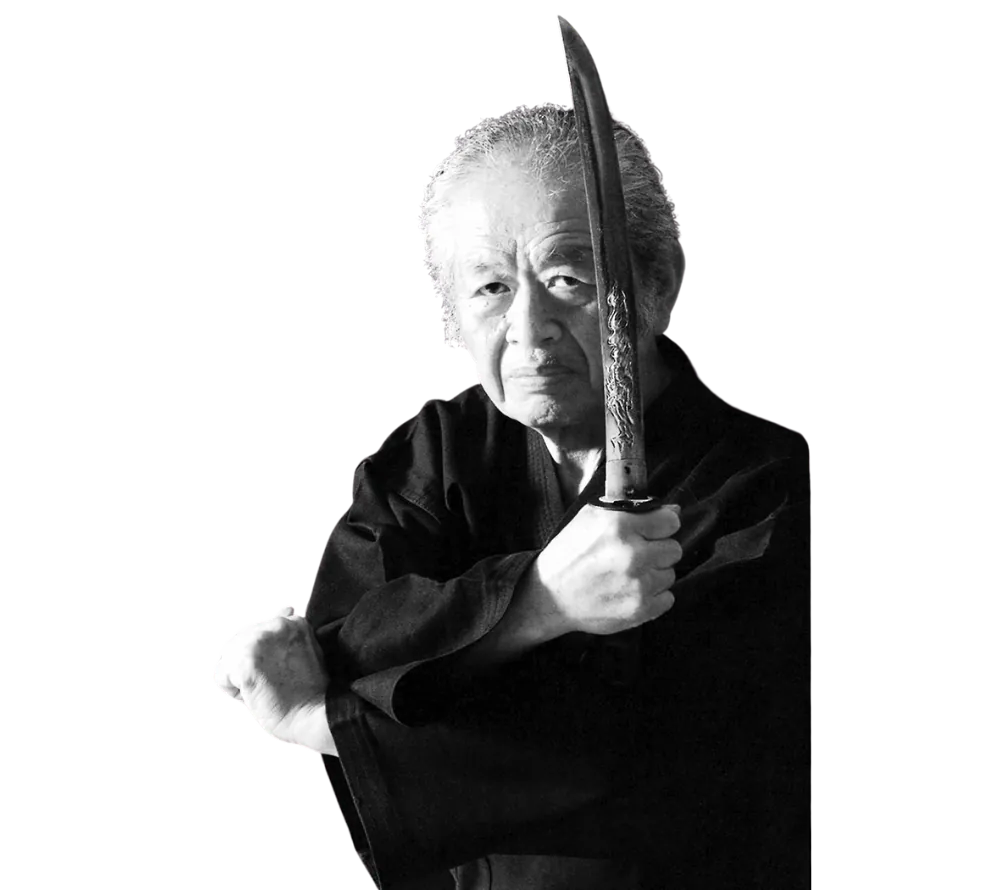
The Bujinkan is an international martial arts organisation founded by Grandmaster Masaaki Hatsumi, based in Noda, Japan. Its name literally means "The House of the Warrior God" and it brings together nine ancient schools (koryū) of Japanese martial arts, some with over 900 years of history.
Unlike modern sport martial arts, the Bujinkan preserves combat systems created and refined by samurai and ninja warriors in times of real war. There is no competition, no trophies and no weight categories: the goal is to learn to protect your life and the lives of those around you through mastery of body, strategy and spirit.
Training covers unarmed combat techniques (Taijutsu), the handling of traditional weapons such as the sword (katana), the staff (bō) and the spear (yari), among many others, as well as the survival, escape and concealment strategies that were the hallmark of the ancient ninja.
Discover a martial art with over 900 years of history
Techniques forged on the battlefield, not on a sports mat
The Nine Traditional Schools
 九流派 — Kyū Ryūha

The Bujinkan is unique in the martial world because it brings nine distinct warrior traditions together under a single organisation. Three come from ninja traditions (ninjutsu), and the other six are samurai schools. Together they offer an extraordinarily complete combat repertoire.
Togakure-ryū
忍術 Ninjutsu
Founded around the 12th century, this is the most emblematic ninja school of the Bujinkan. It specialises in concealment and escape techniques, the use of shuriken and special tools. Its philosophy emphasises survival over direct combat.
Gyokko-ryū
骨指術 Kosshijutsu
"The School of the Jade Tiger", considered the oldest of the nine. It specialises in attacking the body's weak points using the fingers and knuckles. It is the foundation on which many other Japanese schools were built.
Kukishinden-ryū
八法秘剣 Happō Bikenjutsu
A samurai school renowned for its mastery of multiple weapons: sword, spear, halberd (naginata) and staff. Used by naval warriors, it is characterised by broad, powerful movements ideally suited to combat in armour.
Shinden Fudō-ryū
打拳体術 Dakentaijutsu
"The School of the Immovable Heart". It focuses on powerful strikes and natural throws. Its practitioners trained outdoors, developing a deep connection with their surroundings. It uses a natural posture as the basis of all its techniques.
Kotō-ryū
骨法術 Koppōjutsu
"The School that Fells the Tiger". Complementary to Gyokko-ryū, it specialises in attacking the opponent's bone structure. It uses short, precise strikes that aim to break the adversary's balance and structure with devastating effect.
Takagi Yōshin-ryū
柔体術 Jūtaijutsu
A close-quarters combat school specialising in joint locks, throws and chokes. It was designed for fighting indoors and in confined spaces. Its motto: "A flexible willow does not break under the snow".
Kumogakure-ryū
忍術 Ninjutsu
"The School Hidden in the Clouds". A ninja tradition centred on survival and evasion. Its techniques include acrobatic leaps, the use of improvised tools and distraction tactics. It is characterised by the use of the kamayari (hooked spear).
Gyokushin-ryū
忍術 Ninjutsu
"The School of the Jade Heart". The third ninja tradition of the Bujinkan, specialising in strategy, espionage and manipulation of the adversary. It focuses on subtlety and intelligence over brute force.
Gikan-ryū
骨法術 Koppōjutsu
"The School of Truth, Loyalty and Justice". A samurai school with special striking and kicking techniques. It is characterised by dynamic, explosive movements. Its founder was known for his extraordinary strength and sense of honour.
Can you imagine training techniques that were tested in battle?
What we train is not theory: it is survival turned into art
Why is Bujinkan different?
ANCIENT ARTS VS MODERN ARTS
Gendai Budō
Modern martial arts
- Created in the 19th-20th centuries for sport and education
- Competition for points, trophies and medals
- Strict rules limiting which techniques are allowed
- Categories by weight, age and level
- Focus on a single discipline (strikes OR throws OR weapons)
- Examples: Judo, Karate, Aikido, Kendo, Taekwondo
Kobujutsu
Ancient martial arts (Bujinkan)
- Traditions born between the 12th-17th centuries to survive in battle
- No competition: training simulates real situations
- No artificial rules: you train for the reality of combat
- Open to everyone regardless of weight, gender or age
- A complete system: strikes, throws, weapons, strategy and survival
- 9 complete schools within Bujinkan
Bujinkan is neither better nor worse than modern arts: it is different in its purpose. While sport arts pursue competitive excellence, the Bujinkan preserves combat systems designed for a single goal: to protect life.
You don't need any previous experience to start
Your first class is free and with no commitment
The Grandmasters
THE LINEAGE THAT PRESERVED 900 YEARS OF WARRIOR TRADITION
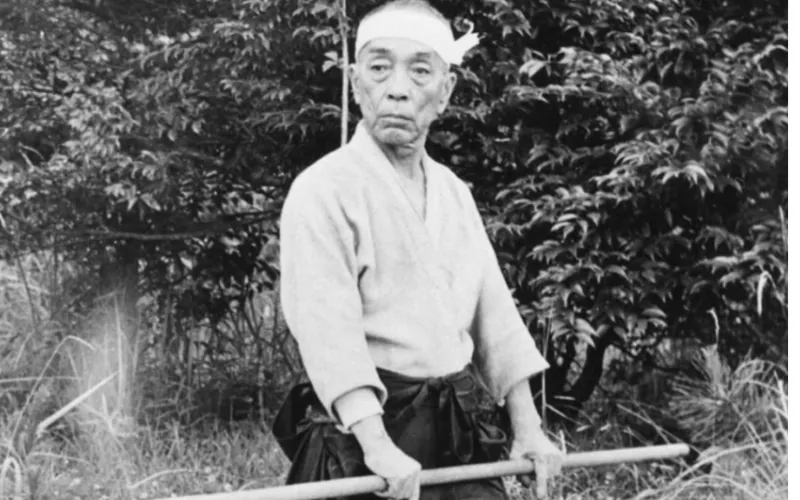
Takamatsu Toshitsugu
1889 — 1972
"The last ninja"
Toshitsugu Takamatsu was the last great warrior to live in an era when martial arts were still used in real combat. Born in Akashi, he began training at the age of nine with his grandfather, Toda Shinryuken Masamitsu, heir to several warrior traditions.
Throughout his life, Takamatsu travelled to China where he tested his skills in real confrontations, earning the nickname "Moko no Tora" (The Mongolian Tiger). He was the guardian of the nine schools that make up today's Bujinkan, and devoted the last 15 years of his life to passing on all his knowledge to a single disciple: Masaaki Hatsumi.
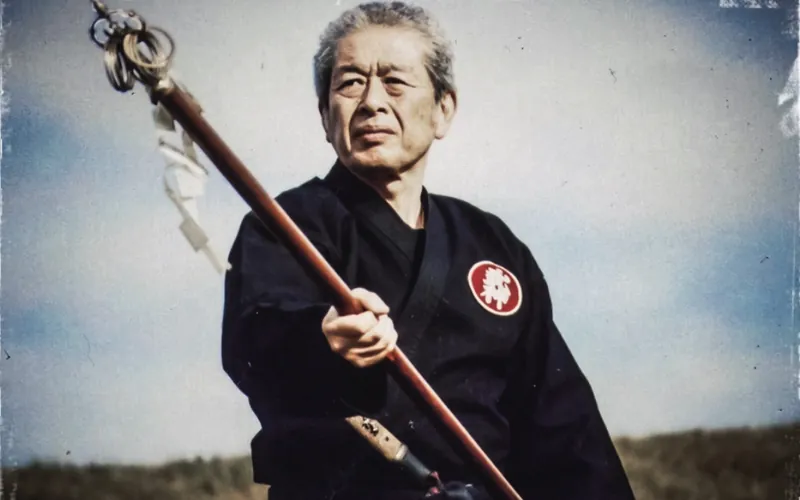
Masaaki Hatsumi
1931 — present
Sōke (Grandmaster) of the Bujinkan
Masaaki Hatsumi is the direct heir to the nine traditions Takamatsu passed on to him, and the founder of the Bujinkan Dōjō. Born in Noda, Chiba, he began training in martial arts from a young age, but it was on meeting Takamatsu that he found his true path.
For over 50 years, Hatsumi Sensei has travelled the world teaching and spreading these arts. Under his leadership, the Bujinkan has expanded to more than 50 countries, with thousands of active dojos. He is the author of numerous books and has been honoured by the Japanese government with several cultural awards. He has now retired from active teaching and delegated its direction to his most senior students.
Book your free first class
Come and meet us, and feel what it is to train like a warrior
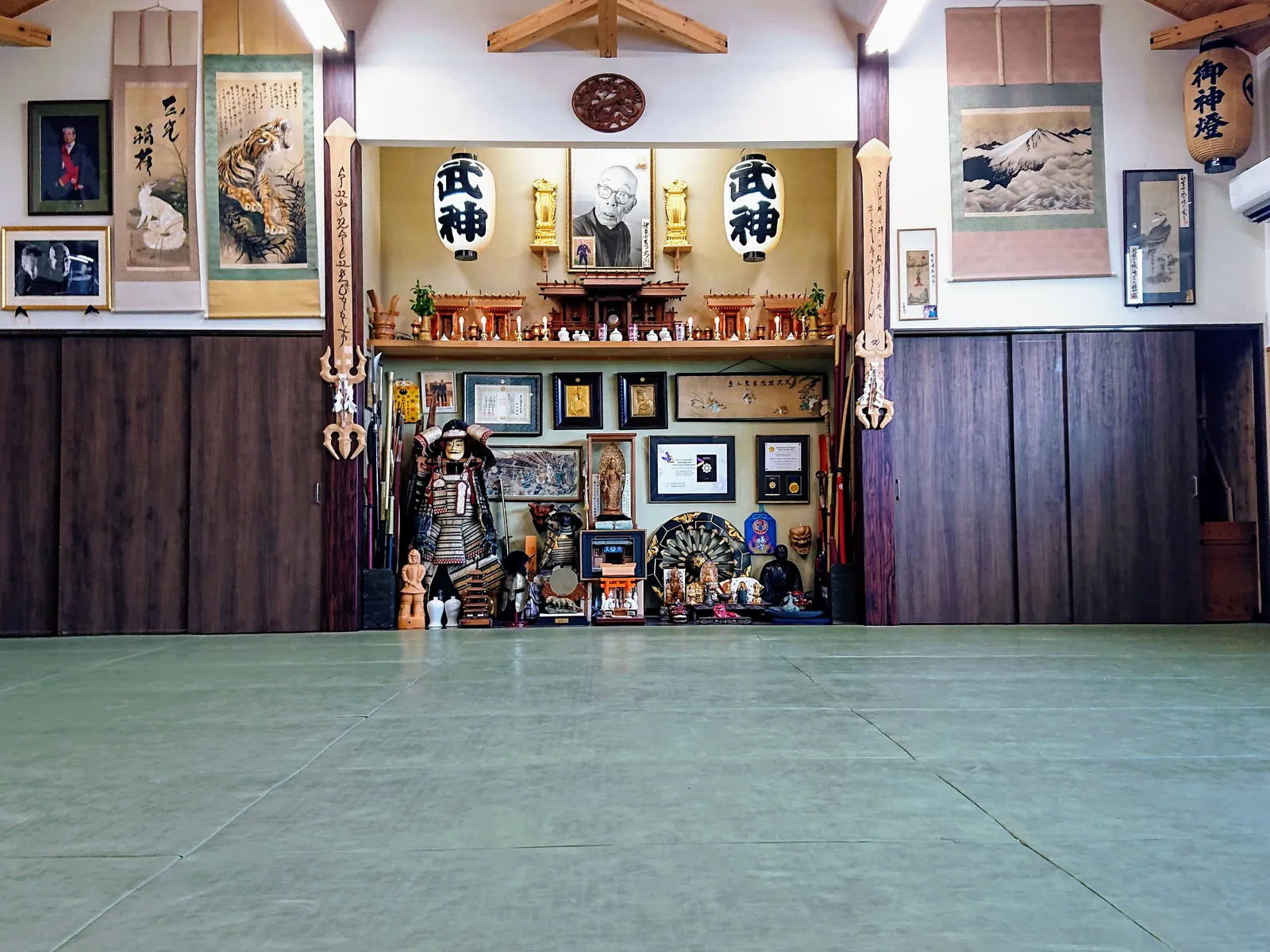
The Hombu Dojo
THE WORLD CENTRE OF THE BUJINKAN IN JAPAN
The Hombu Dojo (本部道場, "main dojo") is located in the city of Noda, in Chiba prefecture, Japan. It is the world headquarters of the Bujinkan and the place where Hatsumi Sensei taught for decades.
For Bujinkan practitioners around the world, visiting the Hombu Dojo is a transformative experience. It is the martial pilgrimage site where you breathe the living history of nine warrior traditions, and where generations of budōka have trained under the direct guidance of the Sōke.
Today the dojo remains active under the direction of the most senior Japanese instructors, and continues to welcome practitioners from all over the planet who travel to Japan to train at the very source of these ancient arts.
One martial family, many dojos
PARTNER DOJOS IN CATALONIA
The Bujinkan is a worldwide family present in more than 50 countries, and here in Catalonia several of us dojos share the same path. If you live far from Sant Cugat, these dojos — run by colleagues we trust completely — will welcome you with open arms. What matters is that the art reaches you.